Jun 222011
 
Part of the ongoing series:
You Be The Judge

The state medical boards of Colorado and California handled the professional misconduct of an Aurora psychiatrist very differently.

Psychiatrist Elise Sannar signed stipulations with the Colorado State Board of Medical Examiners in 2007 and 2009, in which she admitted professional misconduct.  Because she was licensed in both Colorado and California, her conduct was the subject of reviews by the medical boards of both states.

According to the Colorado State Board of Medical Examiners’ Second Stipulation and Final Agency Order dated July 16, 2009 and available on the Colorado Department of Regulatory Agencies website, psychiatrist Sannar admitted to the following facts:

  • From July 2005 to July 2006, she took a leave of absence from a residency program in psychiatry at the University of Colorado Health Sciences Center so she could work as a forensic psychiatrist at the Colorado Mental Health Institute at Pueblo (CMHIP).
  • In August 2005, patient J.M., an inmate, was transferred to CMHIP with a legal status of Incompetent to Proceed in court with criminal charges against him.  Sannar was his treating psychiatrist from roughly the time he arrived at CMHIP through November 2005.
  • While in treatment with psychiatrist Sannar, J.M. informed her that he had developed romantic feelings for her.  Sannar did not transfer J.M. to another psychiatrist for treatment, as was required by generally accepted standards of practice.
  • J.M. left CMHIP in November 2005 with a legal status of Competent to Proceed, after which he was tried on criminal charges and ultimately sentenced to four years in prison.
  • Within six months of the end of treating him at CMHIP, Sannar began a romantic relationship with J.M., which continued until approximately February 2007.  The details were not specified in the public documents.
  • Sannar admits through the documents she signed that she “was aware at all relevant times of the ethical and medical impropriety of beginning and maintaining such a relationship with a patient.”

With a finding of unprofessional conduct, the Colorado State Board of Medical Examiners has a range of disciplinary actions it can take, including suspending, revoking, placing on probation or otherwise restricting, limiting or placing conditions on a license.

What did the Colorado Medical Examiners Board do?  It gave her five years probation, dating from November 16, 2007, with certain treatment and monitoring required for Sannar and certain restrictions on her treatment of patients, as detailed in the Second Stipulation and Final Agency Order.  Her license remained active.

What did the Medical Board of California do with the same set of facts and admissions from Sannar?  It got a signed Stipulation for Surrender of License from her.  (The document can be accessed on the Medical Board of California website by entering license #96357.)  Sannar can no longer practice as a psychiatrist in the state of California.

Last month, the Colorado State Board of Medical Examiners took yet another action, this time to terminate Sannar’s Second Stipulation after just 3½ years of probation, apparently on Sannar’s petition for early termination.  Her license is now active without any conditions in the state of Colorado.

According to her online Physician Profile, Sannar is currently employed as a psychiatrist by the Children’s Hospital in Aurora, and has faculty affiliations at both Children’s Hospital and the University of Colorado Hospital.

What do you think?  Did the Colorado State Board of Medical Examiners act appropriately under the circumstances?

May 102011
 
Part of the ongoing series:
You Be The Judge

A Pueblo grand jury has found official wrongdoing, but no criminal conduct in the death of a patient at the Colorado Institute of Mental Health at Pueblo (CMHIP) last August. Troy Geske, who was obese and suffering from a respiratory infection, suffocated while being restrained face down and left unattended in a seclusion room at the facility after refusing to take psychiatric drug(s) prescribed to him.

According to the grand jury report, staff at the institution committed “misfeasance and malfeasance with regard to a governmental function, and abused their authority resulting in the death of Mr. Geske.” Malfeasance includes the failure to perform a legal duty or the violation of state laws or rules. But the grand jury declined to hand down any indictment, which could have included a charge of criminal negligence.
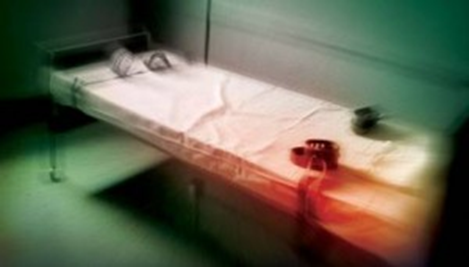
Geske reportedly was taken to a seclusion room after he resisted taking prescribed psychiatric drug(s). There he was put facedown in prone restraint, with leather straps binding his arms and legs to a  gurney, and an additional leather strap across his torso to hold him down. He was then left alone in the room and was improperly monitored by staff outside the room. He slowly suffocated during nearly 10 minutes of struggling to breathe while in restraint.

While it is not known what psychiatric drug(s) Geske had refused, he reportedly had been re-admitted to CMHIP from a community placement in July for hallucinations, confusion, passive-combative behavior and depression. All of these conditions are common and well-known side effects of drugs routinely prescribed to psychiatric patients. (For more information on the dangerous side effects of psychiatric drugs, click here.) It is unknown what psychiatric drugs he was taking when he was readmitted, what increased dosages or additional drugs he may have been prescribed after being readmitted, or what side effects may have led him to refuse to take the drug(s).

The incompetence and extreme indifference of CMHIP staff towards Geske in the final minutes of his life were cited in the grand jury report, according to Denver’s 7News and the Pueblo Chieftain:

• “The staff member controlling the patient’s torso was using a disapproved control technique by using his forearm to apply pressure to the patient’s back during the entire restraint process,” while at the same time “Mr. Geske appeared to be struggling by trying to lift his head and torso off the bed” to breathe.

• “During the process of applying the restraints, a staff member used inappropriate pressure to the back of the patient’s head, holding his face at or near the surface of the mattress” on the gurney.

• Once restrained and unable to move or breathe sufficiently, Geske was left alone in the room, with staff failing to monitor him carefully: “It is apparent that Mr. Geske was not under direct observation at all times.”

• When staff finally realized Geske had stopped breathing, they rushed into the room but had difficulty undoing the restraints, losing precious time before CPR was started and a defibrillator used, both ultimately unsuccessful.

• Metal shears that were supposed to be available in the room to cut the leather restraints were not used “because staff either were unaware of their location or believed the shears were locked at the nursing station.”

• When staff tried giving Geske oxygen, the oxygen tank was empty. The report said, “CMHIP policy mandated oxygen tanks be tested every shift and documentation showed the tank in use had been checked off as full during the previous shift.”

• The report stated that “it appeared that no one had authority to assume – or did not assume – control of the efforts to revive Mr. Geske.”

The grand jury report concludes that “there was a systematic failure to adequately train staff, to insure staff followed policies for seclusion and restraint and patient safety related thereto, and to disseminate safety information concerning restraint procedures that was readily available, and if put into practice would have prevented the death of Mr. Geske.”

While insufficient funding or staffing continue to be blamed for ongoing problems at CMHIP, the grand jury report “finds the problems leading to Mr. Geske’s death could have been corrected with little or no impact” to CMHIP’s budget.

The grand jury also found overarching failures at CMHIP: “Public servants of the CMHIP breached their duty of care to adequately train its employees,” to “effectively communicate,” “effectively document evidence for patient care,” and “effectively investigate the death of Mr. Geske.”

CMHIP’s own investigation of the incident was reportedly carried out by a member of the facility’s public safety department, who himself had taken part in the restraint of Geske. While two top officials of the public safety department testified they didn’t believe the investigator had a conflict of interest, the grand jury disagreed. It found that the investigator never interviewed all the staff involved in the incident and did not even review the video surveillance of the incident before completing the investigation report.

Prone restraint had been banned by the Colorado Department of Human Services in its Division of Developmental Disabilities, but the rest of the divisions within the department were not notified that the procedure was banned until after Geske’s death. Other state departments, including the Department of Corrections and the Department of Education, have not banned prone restraints.

The grand jury found no criminal wrongdoing, so no one involved in the incident has been criminally charged.

Linda Stephens, mother of Troy Geske, made it clear that no one person could be blamed for her son’s death because they were all responsible. “It was the system [at CMHIP] that killed my son.”

What do you think? Did the Pueblo grand jury come to the right conclusion?

Restraint “procedures” are the most visible evidence of the barbaric practices that psychiatrists choose to call therapy or treatment. For more information on restraints, click here.

If you or someone you know was put in restraints in a psychiatric facility or has been harmed by psychiatric drugs, you can contact us privately by clicking here or by calling 303-789-5225. All information will be kept in the strictest confidence. We welcome your comments on this article below.

Apr 132011
 
Part of the ongoing series:
You Be The Judge

Englewood, Colorado psychiatrist Ann Barbara Seig is the subject of disciplinary action by the Colorado Medical Board for unprofessional conduct. According to a Second Stipulation and Final Agency Order dated March 10, 2011 and publicly posted on the Colorado Department of Regulatory Agencies (DORA) website, psychiatrist Seig (referred to in the document as “Respondent”) did the following:

“Respondent treated patient C.H. from approximately November 2006 through April 2009. C.H. presented with panic attacks, alcohol use and a history of delirium tremens. Respondent began treatment of a previously untreated hairline fracture of C.H.’s heel with Percocet, without data to support the diagnosis. Respondent doubled C.H.’s dose of Percocet within one week. Respondent doubled patient C.H.’s dose of Percocet in the following six months, adding Vicodin to 120 mg. daily doses, and refilled prescriptions by telephone, without office visits. In August 2007, Respondent made a note in patient C.H.’s medical record that the patient was emaciated, but made no plan to evaluate. In December 2007, patient C.H. continued to prescribe narcotics, but did not make any referral to or consultation with an orthopedist or podiatrist. After Respondent surrendered her DEA [U.S. Drug Enforcement Administration] registration, Respondent changed her diagnosis of patient C.H. from panic disorder to bipolar disorder, despite continued alcohol use and symptoms of benzodiazepine withdrawal. Respondent proceeded to treat patient C.H. with a combination of two antipsychotic medications, mood stabilizers, antidepressants and anticonvulsants.”

More unprofessional conduct with other patients is also detailed in the Second Stipulation and Final Agency Order. You can read the whole document here. (If the DORA login page appears, select Division of Registrations Board/Program Action Documents, click Login, and the document will appear.)

The disciplinary actions available to the Medical Board include suspending, revoking, placing on probation or otherwise restricting, limiting or placing conditions on a medical license. They also include a letter of admonition or other letter of reprimand.

So what did the Medical Board’s Panel of Inquiry decide to do with this psychiatrist? Answer: her license remains active with conditions, including five years of probation, an education program and practice monitoring, as detailed here. (If the DORA login page appears, select Division of Registrations Board/Program Action Documents, click Login, and the document will appear.)

What do you think? Did the Medical Board act appropriately under the circumstances?